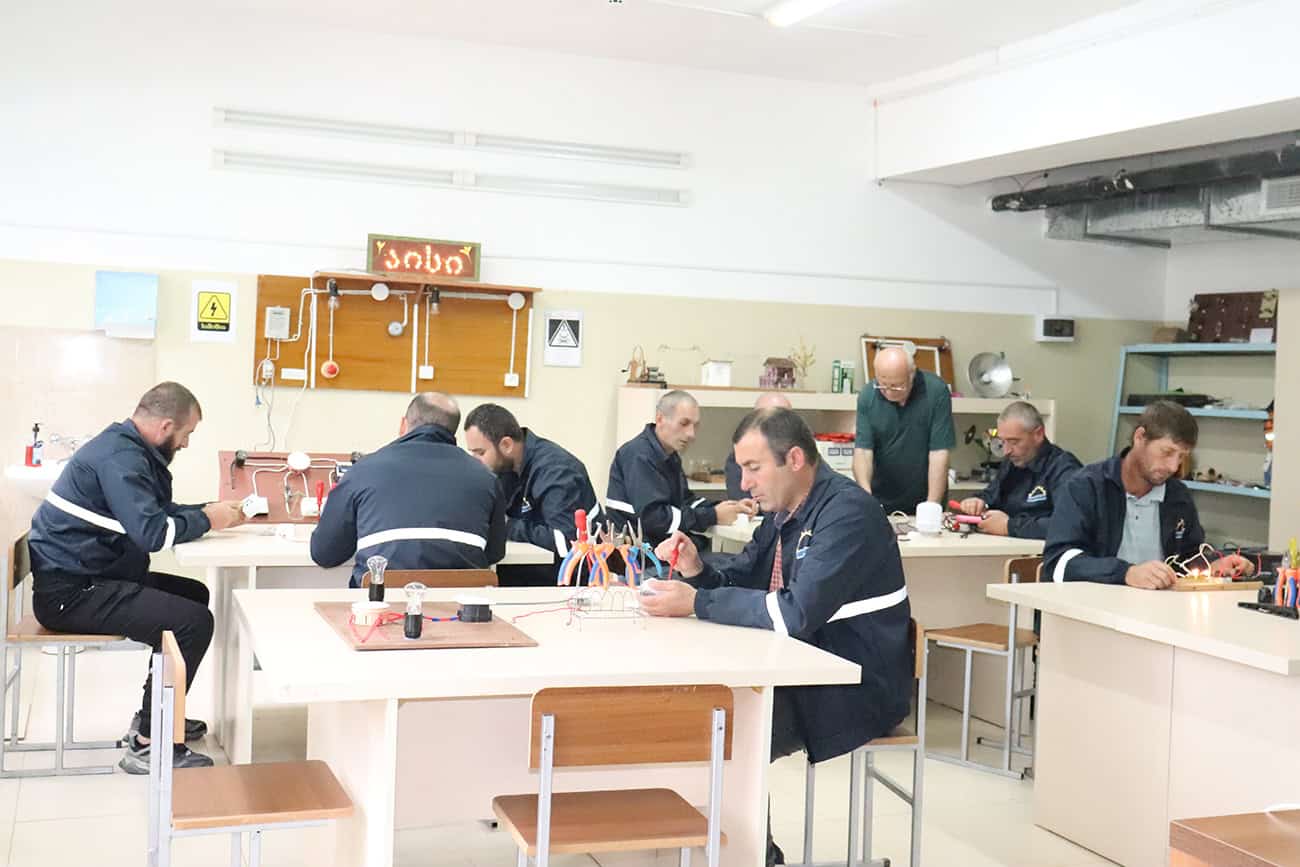
Electrical Installation in Residential and Small Industrial Environments
Objective
The aim of the vocational training programme is to prepare learners with the knowledge and practical skills required to perform electrical installation work in residential and small industrial environments.
Graduates will be able to identify workplace hazards, assess risks, and respond appropriately to accidents and emergency situations. They will acquire the skills to measure the parameters of direct current (DC) circuits, calculate the parameters of alternating current (AC) circuits, prepare engineering drawings, interpret engineering drawings prepared in accordance with applicable standards, describe the properties and applications of conductors, insulators, magnetic materials, and electrical technologies, select appropriate materials based on electrical circuit diagrams, apply methods and procedures for electrical circuit protection, and install and test lighting and power circuits in residential and small industrial settings.
Admission Requirement
- Completion of basic general education.
Graduate Competencies
Upon successful completion of the programme, graduates will be able to:
- Identify workplace hazards, assess risks, and respond effectively to accidents and emergency situations.
- Measure the parameters of direct current (DC) circuits.
- Calculate the parameters of alternating current (AC) circuits.
- Prepare engineering drawings and interpret engineering drawings produced in accordance with recognised standards.
- Describe the properties and applications of conductors, insulators, magnetic materials, and electrical technologies.
- Select materials based on electrical circuit diagrams.
- Apply electrical circuit protection methods and procedures.
- Install and test lighting and power circuits in residential and small industrial environments.